
Protected: Why Dental MSPs and Dental IT Providers Need a Peer Network to Scale Faster
There is no excerpt because this is a protected post.
There is no excerpt because this is a protected post.
“In a cyber incident, the first six hours often shape what happens next. Early decisions affect how quickly systems are contained, how smoothly recovery begins, and how much disruption the practice experiences.
The case below highlights how early response changed the outcome and why preparation before an incident matters more than most organizations realize.

“Cyber insurance is an important part of a dental practice’s risk management strategy, but it is most effective when paired with clear, documented cybersecurity controls that align to policy requirements.
Many claims problems stem from a mismatch between what the practice represented during underwriting and what is actually implemented and maintained.

At SmileIT, our mission is to always provide the dental practices we support with our best service and advice and occasionally, we are tasked with going above and beyond the call of duty.
E&M Dental have been a loyal and valued client of SmileIT since we were chosen to be a part of their build team for their first office in 2011 – and then again their second location in 2015 – so our entire team knows this practice and their technologies inside and out – and that deep relationship paid off in a very big way!

“AI-powered” project management. “AI-enhanced” customer service. “AI-driven” analytics. These tools are everywhere, and they all have something in common: they’re wrappers.
In the AI world, a wrapper is exactly what it sounds like—someone took a Large Language Model (like GPT or Claude), wrapped a specific interface around it, added prompts, and packaged it as a specialized tool. You pay monthly for something that fundamentally just sends your data to an LLM with pre-written instructions.

As part of its mission to advance oral healthcare through innovation, security, and collaboration, the Dental Integrators Association proudly features thought leadership contributed by its member organizations. Each article in this series offers practical insights, shared experiences, and timely strategies from those working at the intersection of IT and dentistry. Together, we are building a smarter, stronger community—one idea at a time.
On October 14, 2025, Microsoft officially ended support for Windows 10. If your dental practice is still running Windows 10, you need to make critical decisions now about your technology infrastructure, HIPAA compliance, and patient data security. This article explains what Windows 10 end of support means for your practice and outlines your options.

Marking the Return of Yaron Baitch to the DIA Community
Port Orange, FL — The Dental Integrators Association (DIA) is proud to announce the newest addition to its membership: Digital Practice Inc. (DPI), led by industry veteran Yaron Baitch. Headquartered in Hawaii, DPI delivers specialized, HIPAA-compliant IT solutions to dental practices nationwide, with a strong emphasis on cybersecurity, operational continuity, and personalized support.
This membership marks a welcome return for Baitch, who has previously been involved with the DIA through other ventures. Known for his relentless commitment to data security and advancing the IT maturity of the dental industry, Yaron is a familiar and respected voice among his peers.
“We’re absolutely thrilled to welcome Yaron back to the DIA, this time through his new organization, DPI,” said Michelle Hambidge, Executive Director of the DIA. “Yaron’s passion for dental-specific IT solutions and his proactive approach to cybersecurity align perfectly with the DIA’s mission of helping integrators raise the bar through collaboration, shared knowledge, and best practices.”
As the only national association dedicated to Managed Service Providers (MSPs) and technology firms serving the dental industry, the DIA fosters an ecosystem where members are better together—sharing tools, strategies, and solutions to support dental clients more effectively and sustainably.
“Joining the DIA again feels like coming home,” said Yaron Baitch, CEO of DPI. “This organization brings together the best minds in the dental tech space, and I’m honored to be a part of a community that actively works to raise standards, solve problems, and protect practices through smart, secure IT.”
With this membership, DPI joins a nationwide network of like-minded integrators committed to innovation, compliance, and elevating care through technology. The addition of DPI also reinforces DIA’s commitment to expanding geographic diversity and welcoming companies who share its core values of collaboration, trust, and integrity.
About Digital Practice Inc.
Digital Practice Inc. is an IT service provider headquartered in Hawaii, delivering tailored technology solutions to dental practices across the U.S. DPI specializes in HIPAA-compliant systems, proactive cybersecurity, and secure infrastructure design helping dentists stay focused on patients, not tech issues. Learn more at www.digitalpracticeinc.com.
About the Dental Integrators Association
The Dental Integrators Association (DIA) is a national network of independent technology providers dedicated to serving the dental industry with excellence, innovation, and collaboration. For more than 18 years, the DIA has united a community of IT professionals who understand the unique needs of dental practices and the critical role technology plays in patient care.
At its core, the DIA exists to advance oral healthcare through a unified community of specialized IT professionals, who not only support dental practices but also elevate one another while driving security, innovation, and operational excellence.
Guided by its vision to cultivate an engaged dental technology community that protects practices, advances standards, and fosters lasting value through mutual support, the DIA empowers its members to collaborate, grow, and lead the future of dental integration.
Learn more at https://dentalintegrators.org/.
Contact: Michelle Hambidge
Email: michelle@dentalintegrators.org
Phone: 321.652.8513

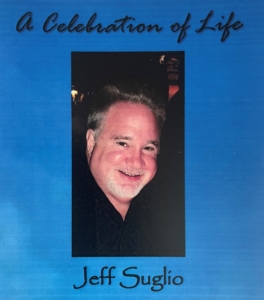 It is with great sadness that we announce the passing of a loved and respected member of the DIA community. Jeffrey Suglio, 60, passed away suddenly on April 25, 2021, and immediately entered the presence of his Lord and Savior, Jesus Christ.
Jeff was born May 7, 1960, in Cleveland, Ohio, to Frank and Betty Lou Suglio, who preceded him in death, as did his newborn son, Scott. Jeff leaves behind his wife of almost 33 years, Michelle, and sons, Sam (Amelia) and Stephen.
Jeff was the owner of DMA Tech Solutions, which he started in 1987. His wife, Michelle, has been his faithful business partner since 1989. His son, Sam, joined the business in 2016 and will be carrying on Jeff’s legacy. Jeff joined the DIA in 2014; in that time, he was constantly at our conferences and integral in our meetings and discussions. He was always available to help encourage and talk through any questions. As time marches on, the DIA will surround Sam, Michelle, and DMA, with support, encouragement, and assistance in any way we can.
We were the lucky ones to have called Jeff a friend. He continually met each of us with a smile that was so big and genuine it couldn’t help but be returned, and he could always be counted on for a good story or two at the end of the day.
The DIA members who attended the Cabo Conference with Jeff, just a week before his unexpected death, feel so blessed that we could spend that time with him and Michelle. It is a joyful memory we will hold onto for years to come.


 This is an article written for Sally McKenzie’s newsletter. The Dentist’s Network – By Patrick Jacobwith, CEO Sunset Technologies, DIA Board Member.
If you are connected to the internet, this is a must read.
Imagine, it is Friday morning. You stop at the local coffee spot; your mind is on the day and weekend ahead. You are thinking about your patients, events for the kids, and chores at home. Your life is smooth right now, your business is thriving, and you love where you live.
What is any dentists’ worst nightmare? Losing their data? Losing their business? This story includes both possibilities.
Your phone rings and it is your office manager telling you the computer is not working. Probably no big deal, you head to the clinic. What happens next tears at your chest. Good people, taking care of others, are put into a terrible situation by a faceless cyber-criminal.
DIA Member Case Study
Upon arrival the doctor and staff see a ransom note on the computer asking for seven bitcoins (approximately $60,000) to get access to the data…the clinic has been hit with ransomware. This begins an distressing emotional rollercoaster.
IT Support receives the first call at 8:09am. The clinic’s system was infected with a “Zero Day” type of ransomware, which means this attack was new to the entire world. We verified the Zero Day designation with the FBI. IT Support deploys its emergency response team comprised of on-site and remote staff.
The Rollercoaster
Friday
Concerned but hopeful – There are patients walking into the clinic and you have no ability to check them in or see any of the details of their appointment. The team quickly pivots to paper and stress is building. IT Support validates the cyber-attack and begins the restore process.
Concern rises – IT Support arrives and brings loaner equipment and begins to look for the backup files. The doctor has been thinking about the backup. He grows concerned because there have been no updates for some time from the outside company he uses for his backup (not an IT Support solution). He remembers receiving daily emails regarding the backups.
Shock then stressed out! – IT Support confirms, the outside company was not backing up the practice management system, only other parts of the business. The most recent backup files for the practice management software are seven months old. IT Support begins two processes on parallel paths:
The doctor leaves the clinic in disbelief. Desperate thoughts enter his brain. He is unable to eat yet had to attend a friend’s birthday party and pretend nothing has happened. He has called his partner and they are thinking:
Raise money and just pay the ransom. They know this could lead to more demands and more money and still not get the data back.
They live in a small town, this has put the business in jeopardy. If word leaks out they are concerned they may still lose patients or the entire business.
Was this a HIPAA breach? If so, what do we do with that?
Try to rebuild the data manually.
Start over.
What happens on Monday morning?
Saturday
No sleep. Stress remains constant.
IT Support Path 1 – IT Support has had no luck finding a back door. One of the doctor-owners is at a game for their child, but mentally completely absorbed with what might happen. Waiting is horrible.
IT Support Path 2 – IT Support’s cyber team has begun to track down the cyber-actor. There are methods that have been deployed and developed as a member of Infragard (a private sector organization tied to the FBI) to track down cyber-actors.
With cyber actions, in general, there are two possibilities i) a larger organized crime entity or ii) an individual. In this situation the team caught their first break, the cyber-actor was an individual, larger organized crime entities do not typically negotiate. In these situations, the clock has started, which is usually 36 hours. Also, payment is only through bitcoin. As a result, time is critical. After fast research, an initial email is sent. The game of cat and mouse is on.
Sunday
Helpless, Insecure, Depressed and more…
The doctors call an all-staff meeting on a Sunday. The situation is dire. The entire team digs through the garbage, they look through all paper files to try to lessen the blow and solve Monday. The team does find one ray of sunshine: the clinic uses an online appointment reminder company and have one-week’s information! They can at least deal with Monday, yet the larger questions remain. The team goes home after several hours at the clinic. The doctors are still full of doubt and continue to wait.
IT Support Path 1 – New computers have been put in, the team is working on restoration plans, either if they receive a key, or if they need to rebuild. The team is in constant and close communication with the doctors, which at least provides some sense of relief.
IT Support Path 2 – The cyber team has been playing email cat and mouse with the cyber-actor through the night. The negotiations have been fruitful, break-throughs have occurred. Late Sunday afternoon, the decryption key was received, and the process began. IMPORTANT NOTE: the game is not done, because the cyber-actor can still disrupt the decryption. The conversations are continued while the lengthy process of decryption is performed.
Monday
Very early Monday morning, the data is restored. The cyber-actor realizes he has been beaten – until another day.
The total negotiated ransom: $304.55
Back to the Zero Day designation: IT Support also reported all of this information to the FBI (IGuardian), which resulted in helping many organizations across the country.
Monday
Relief!
The doctors have avoided a potentially catastrophic event to their business. The rollercoaster of the weekend is behind them. One doctor commented after, “I feel like I lost one year off of my life!”
Summary
We roll the clock back on this story. The clinic decided to stick with a separate backup solution from the IT Support recommendation. Unfortunately, as hackers become more sophisticated, situations such as these happen more often. Let a qualified IT Support team, like those in the Dental Integrators Association, help you to minimize your risk. The DIA is an organization dedicated to educating IT professionals. We want to be sure you have cutting edge knowledge on your side, let us help you!
 Patrick Jacobwith is the CEO of Sunset Technologies a multi-state organization based in Minnesota. Patrick is also the President of the Dental Integrators Association. He believes in excellent service and building healthy and productive relationships. Patrick’s core values are built on three words: Service, Humility and Love. Patrick can be reached at patrick.jacobwith@sunsetsecure.com.
 This is an article written for Sally McKenzie’s newsletter. The Dentist’s Network – By Steve McNamara, CEO and Founder of DTC and DIA Board Member.
The Worst Advice We’ve Ever Heard About Dental Office Design.
A prospective client of ours once had a family member run a practice management software upgrade for them. No database backup was taken prior to the upgrade, and their automated backup hadn’t been completed successfully in over two years. They ended up losing their entire database.
After spending 20 years in the dental IT industry helping dentists design new office spaces and start new practices, we’ve heard more stories like this than we care to hear. With so many people voicing opinions on how a dental office should be designed and set up, it is easy to quickly become overwhelmed and potentially follow the wrong advice. Don’t cut corners and make the same mistakes that we’ve witnessed other dentists make. Here are a few examples of bad advice and situations we’ve experienced over the years, and what to do instead:
Network
Cabling
Server Closets
Contractors
Steve McNamara is the CEO and founder of DTC, Inc., a managed service IT provider for dental and medical offices in the Mid-Atlantic region. He has been a member of the Dental Integrators Association for nine years and currently serves on their Board of Directors. Steve has had a passion for computers and IT since he first started working with them in 1994. He has helped countless dental offices design seamless and functional IT systems in an increasingly digital industry.
Phone: 410-877-3625 | Website: www.dtctoday.com